
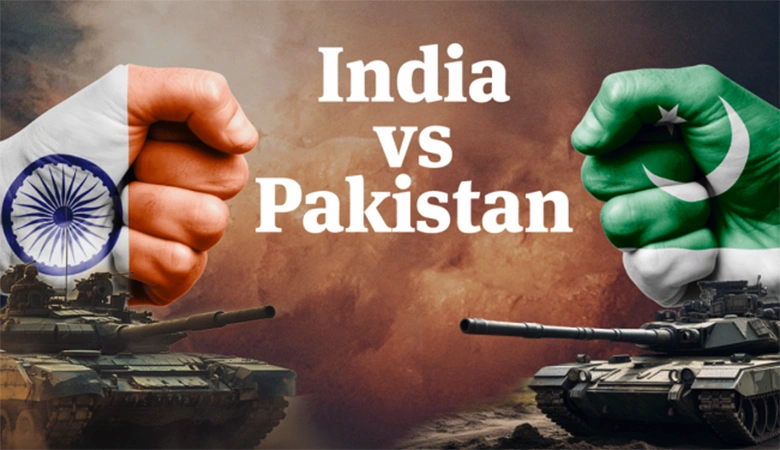

A History of Tension, a Future at Risk
India and Pakistan have fought multiple wars since their partition in 1947, primarily over the disputed region of Kashmir. While previous conflicts were largely contained, the current war has occurred in a vastly different international context. The world is now hyperconnected—economically, digitally, and militarily. As a result, what happens between India and Pakistan no longer stays confined to the subcontinent.
The stakes are higher than ever. Both countries possess large, modernizing militaries and a growing arsenal of nuclear weapons. In this environment, even a small miscalculation or accidental escalation could have catastrophic consequences.
Nuclear Deterrence Under Strain
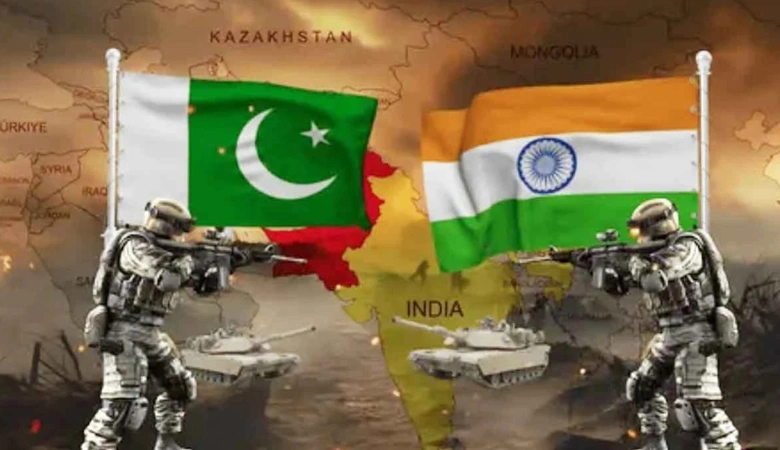
One of the most pressing global concerns is the risk of nuclear confrontation. While both India and Pakistan have maintained a doctrine of strategic deterrence, rising nationalist rhetoric and rapid-fire responses from both governments are testing that fragile balance.
The psychological comfort of “mutually assured destruction” is being eroded by questions of whether rational decision-making can withstand intense pressure and nationalist fervor. The war tests not just these two nations’ restraint but the very idea that nuclear weapons can prevent large-scale war.
Diplomatic Systems at a Breaking Point
The conflict is also exposing the limits of international diplomacy. Institutions like the United Nations have urged calm but failed to enforce effective mediation. Major powers are caught in a web of strategic alignments: the U.S. leans toward India, China supports Pakistan, and Russia tries to walk a tightrope between the two.
This fragmentation of global response reveals a broader truth—the rules-based international order is struggling to function under the weight of multiple rivalries. If the world cannot mediate between two countries with such high stakes, it raises worrying questions about the capacity of current systems to resolve future conflicts.
Economic Repercussions Beyond Borders
War between India and Pakistan doesn’t just disrupt their domestic economies; it ripples through global supply chains, markets, and investment flows. Both countries play critical roles in sectors like pharmaceuticals, textiles, agriculture, and technology services.
As conflict continues, it creates uncertainty for investors, increases energy prices, and heightens insurance and shipping costs across the region. For neighboring nations and trade partners, economic fallout can be severe, particularly in an already fragile post-pandemic global economy.
Refugee Flows and Humanitarian Crises
Another looming issue is the potential for large-scale displacement. If the war escalates or expands into urban centers, millions could be forced to flee. The resulting refugee crisis would put additional pressure on neighboring countries like Afghanistan, Nepal, and Iran, as well as on international aid systems already stretched by other global emergencies.
Humanitarian organizations are calling for urgent access to affected regions, but access is often blocked due to security concerns or political barriers. This adds a tragic human dimension to a war that is already difficult to control.
Rising Polarization and Global Alliances
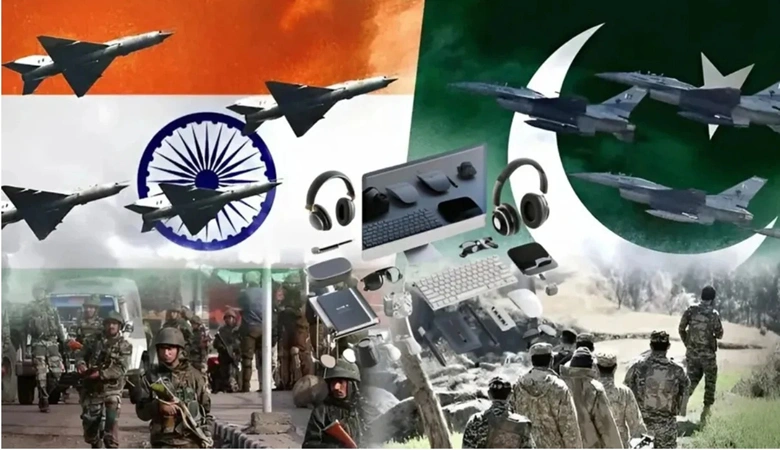
The conflict is also sharpening global polarization. Western democracies are increasingly aligning with India due to shared values and strategic interests in the Indo-Pacific. Meanwhile, Pakistan’s ties with China and Turkey are strengthening as a counterweight.
This division is deepening the fault lines of a multipolar world order, where regional wars become proxy battles for greater power competition. Instead of cooperation, the global response risks descending into a competition for influence—one that undermines collective peace efforts.
The Role of Civil Society and Media
Amid the geopolitical maneuvering, global civil society and independent media are working to shine a light on the human cost of the war. Peace activists, scholars, and humanitarian groups are urging restraint, calling attention to the suffering of civilians and advocating for diplomacy over destruction.
These efforts may not shift military strategies, but they help maintain pressure on governments to justify their actions and remain accountable to international norms. The global public’s voice, especially through digital platforms, is increasingly influential in shaping political narratives and encouraging peace.
A Test of Global Leadership
The war between India and Pakistan presents an urgent test for global leadership. Will powerful nations step up to mediate and de-escalate, or will they retreat behind strategic interests? Can international institutions adapt to mediate in conflicts where power balances are deeply entrenched?
In many ways, the world’s response to this conflict will set a precedent for how future regional wars are handled. It will show whether peace is still a priority or merely a talking point in a fractured international landscape.
Conclusion
The India-Pakistan war is more than a regional struggle—it is a critical juncture for world peace and stability. From nuclear risk to economic shockwaves, from diplomatic paralysis to rising humanitarian needs, the conflict serves as a warning signal.
If the global community fails to contain this crisis, it could usher in a new era of instability where borders are breached, institutions ignored, and war normalized. But if this moment is seized with wisdom, courage, and cooperation, it could become a catalyst for renewed global commitment to peace.